



Key Actions
ii. Communicate how impacts are addressed
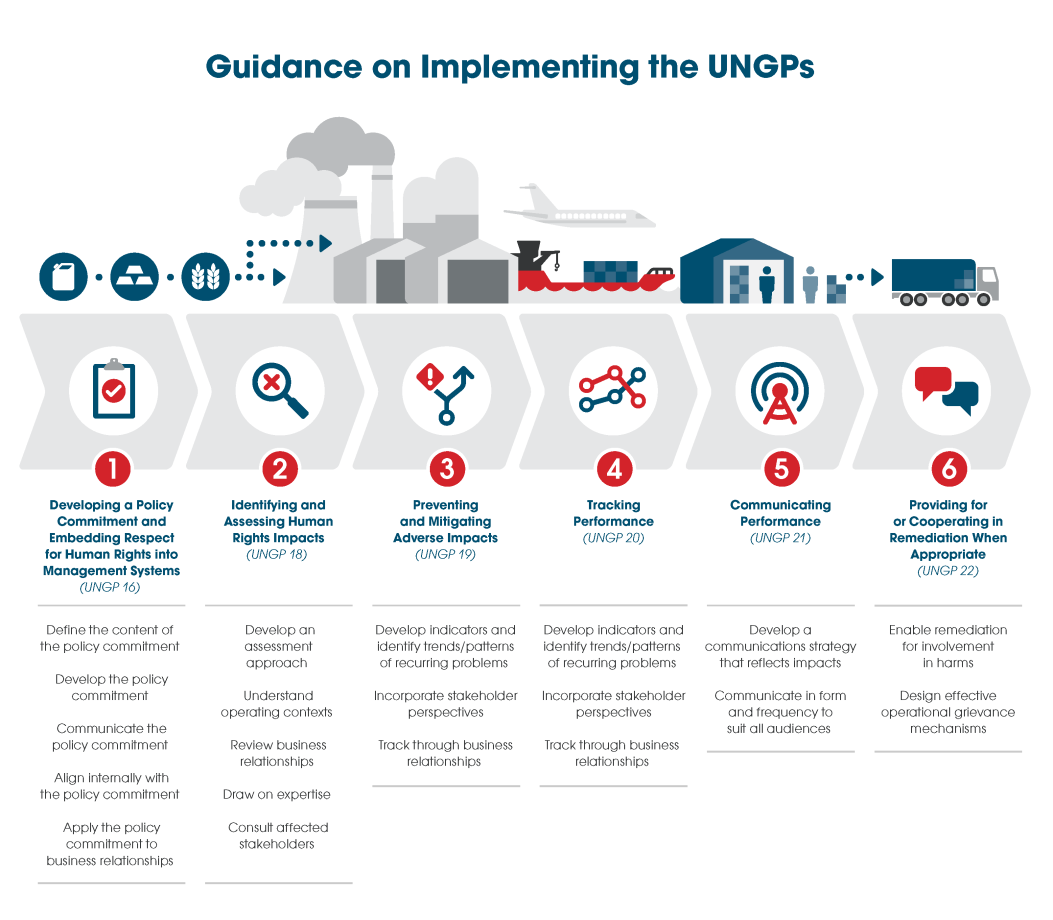
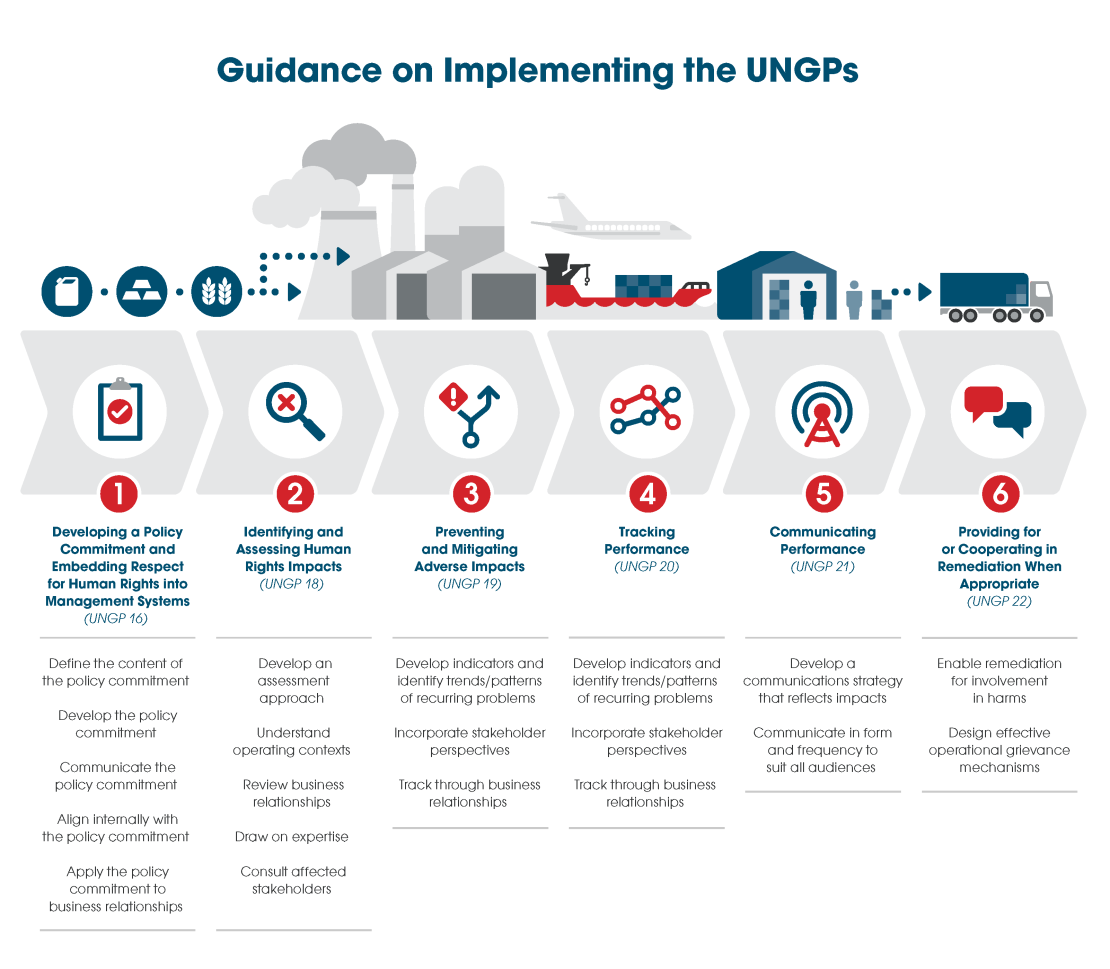
All companies should report formally in cases of severe human rights impacts, whether due to the nature of the business operations or operating contexts. In such cases, in particular, reporting should cover topics and indicators concerning how the company identifies and addresses adverse impacts on human rights. Communications should also convey all the facts necessary for those affected to make informed decisions concerning their interests.
Communicate How Impacts are Addressed
The OECD Due Diligence Guidance for Responsible Business Conduct recommends companies to publicly report information on their due diligence processes, with due regard for commercial confidentiality and other competitive or security concerns. Information should include:
- Responsible Business Conduct (RBC) policies;
- information on measures taken to embed RBC policies into policies and management systems;
- the enterprise’s identified areas of significant risks;
- the significant adverse impacts or risks identified, prioritised and assessed, as well as the prioritisation criteria;
- the actions taken to prevent or mitigate those risks, including where possible estimated timelines and benchmarks for improvement and their outcomes;
- measures to track implementation and results and the enterprise’s provision of or co-operation in any remediation.
The above information should be published in a way that is easily accessible and appropriate. For human rights impacts that the enterprise causes or contributes to, the OECD Guidance requires companies to be prepared to communicate with impacted or potentially impacted rights holders in a timely, culturally sensitive and accessible manner.
UNGP 21 notes that independent third party verification of a company’s human rights reporting can strengthen its content and credibility. Sector-specific indicators can provide helpful additional detail. Companies should look to existing good practice guidance in disclosing timely and accurate information on human rights performance.
A growing number of companies (beyond the commodity trading sector) use the Global Reporting Initiative (GRI) criteria to shape their communications on human rights performance. The GRI provides specific guidance for a number of sectors of relevance to commodity trading including mining and metals, oil and gas and financial services. Companies are also increasingly starting to use the UNGP Reporting Framework, developed by Shift and Mazar and supported by the UN Working Group on Business and Human Rights:
UNGPs Reporting Framework
The UNGPs Reporting Framework is divided in three parts addressing a company’s:
- internal governance of its commitment to respect human rights;
- approach to defining the focus for its reporting and;
- managing salient human rights issues.
The concept of “salient human rights issues” as set out in the Reporting Framework does not appear in the UNGPs, although it has become accepted language for describing such issues. It is a helpful framing which seeks to assist companies in assessing potential human rights risks to people, not the business, and those risks which are the most severe as a result of the company’s activities or business relationships.
The Reporting Framework stresses that:
“Salient issues are therefore not only the issues on which companies should focus their reporting, but also the priority human rights issues for risk management. Using ‘salience’ means that reporting changes from being a resource drain on companies – an exercise in chasing down data for an external communications exercise – to being an investment in putting in place processes that enable the company to manage key risks to people and to the business.” (See further discussion of salient human rights issues at: https://www.ungpreporting.org/resources/salient-human- rights-issues.)