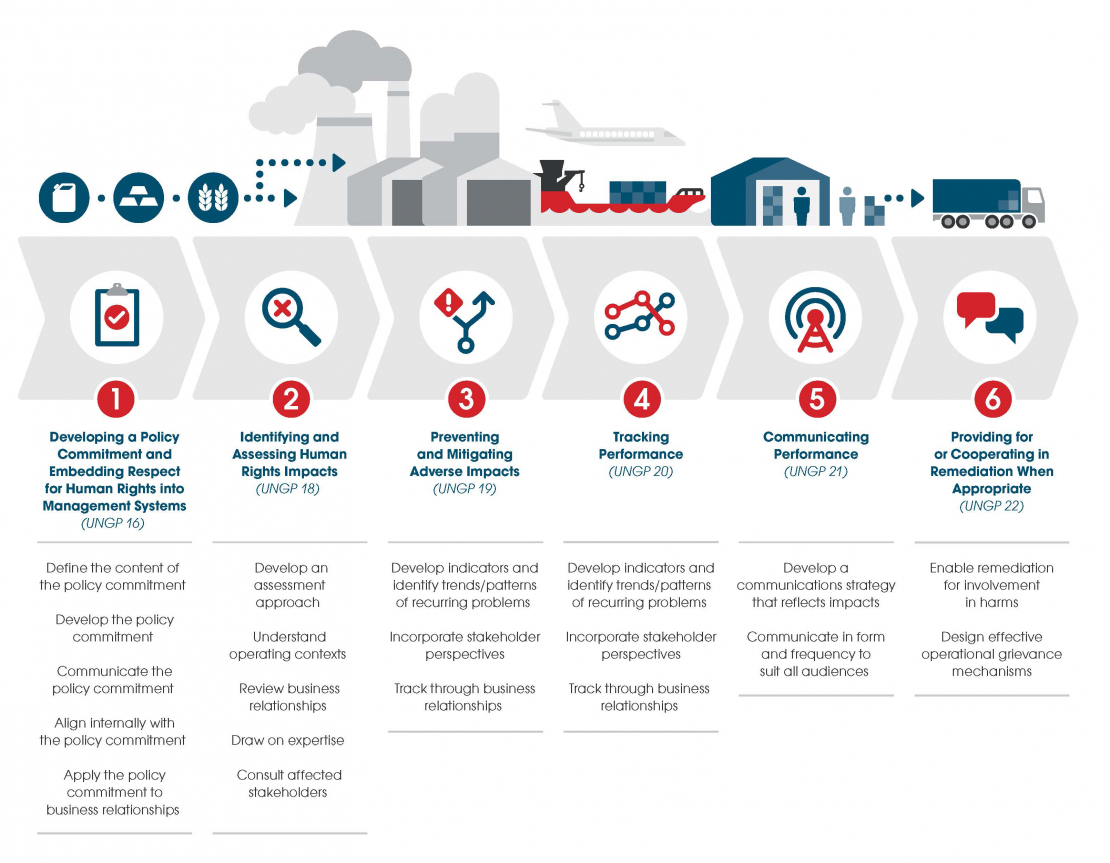









Key Actions
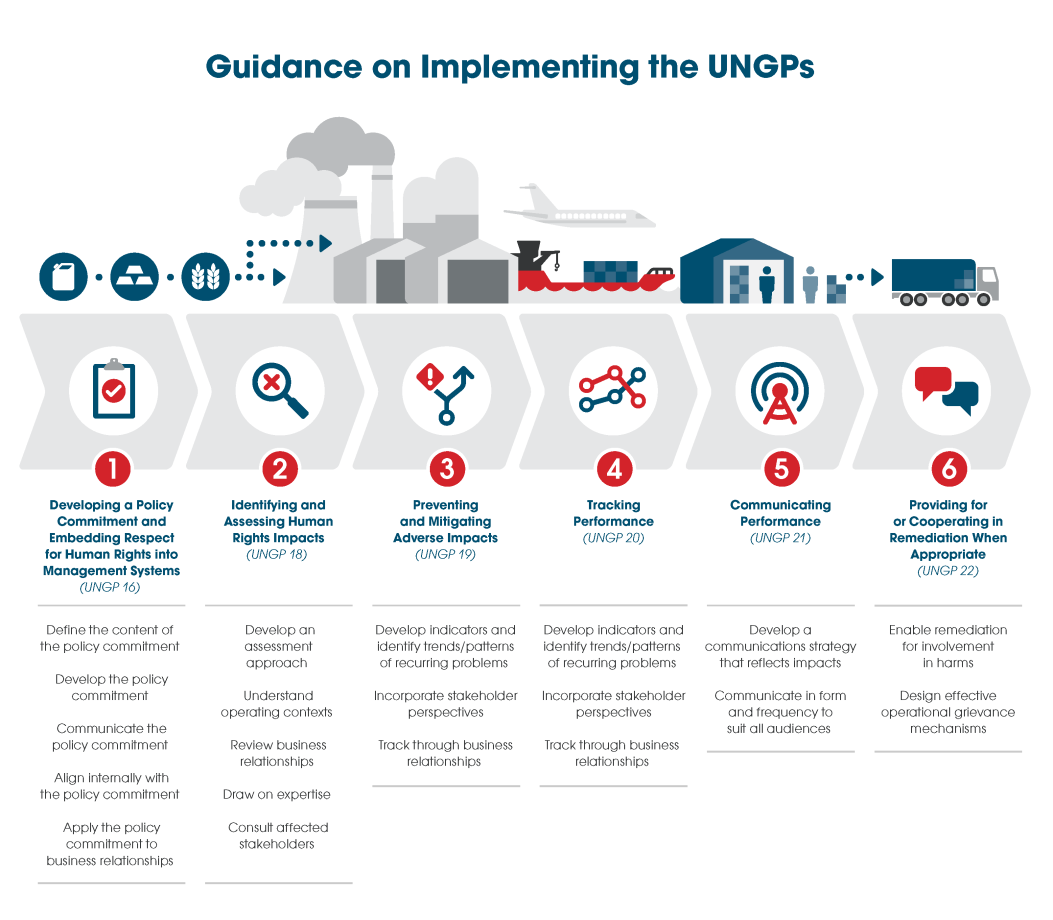
iii. Communicate the policy commitment
The policy commitment should be approved at the highest level of the enterprise, made publicly available and internal systems of accountability should be clear. Management can contribute to embedding the responsibility to respect human rights in the company’s culture by setting clear expectations and sending consistent messages (see Stage 5). Where managers and CEOs fail to make commitments clear over time, companies risk that their policies are perceived at the operational level as not being an important priority for all staff.
The company’s human rights policy should be communicated internally to all personnel and externally to all business partners as well as to people who may be affected by the company’s operation (UNGP 16(d) - see box, and see Stage 5). In the case of commodity traders who typically engage with numerous suppliers and service providers, it is also critically important to clearly communicate the company’s human rights policy externally across the value chain. The policy commitment can be disseminated by posting the relevant documents online, by adding references to the commitment into contracts with third parties or engaging in internal or external conversations. It is important to identify the most effective way to disseminate to target audiences (e.g. access to internet, level of literacy etc.) (see UNGPs Reporting Framework, p.33).

Aluminium factory, Russia

UNGP 16 (d) Principle
Policy commitment is:
...(d) Is publicly available and communicated internally and externally to all personnel, business partners and other relevant parties;...