




Key Actions
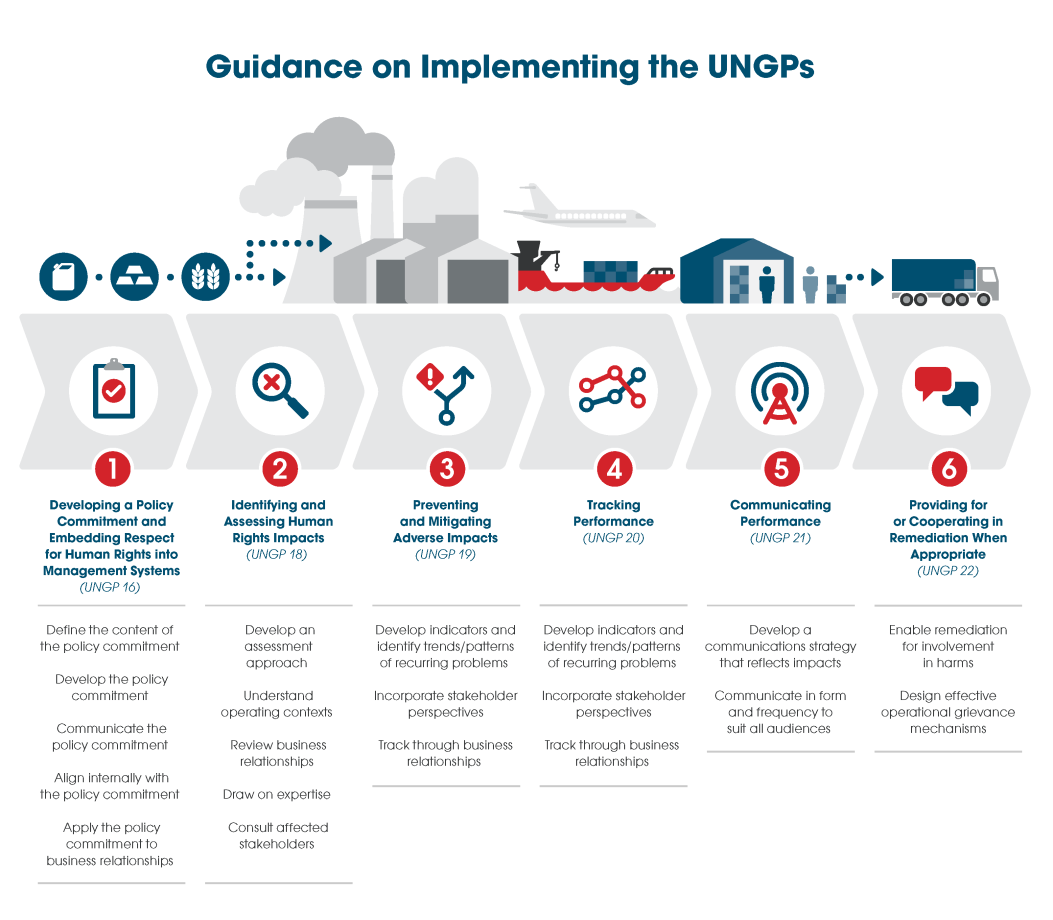
ii. Develop the policy commitment
Senior management should drive policy development. Involving cross functional personnel (e.g. procurement, logistics, compliance, health and safety, external affairs etc.) in the process of policy development helps build understanding, know-how and a sense of common purpose to gather information on human rights risks the company is facing. The way a company develops its policy will of course depend on a range of factors including its size, activities, locations of operations and other relevant issues.
A company’s human rights policy commitment should also be informed by external expertise. Consultations with external experts (independent human rights organisations, national human rights institutions, UN/ILO experts etc.) and affected stakeholders during the policy development process contribute to identifying the human rights risks at stake.
Various institutions such as the UN Global Compact have developed publicly available authoritative guides to help companies, including small and medium-sized enterprises, develop their human rights policy commitment:
Human Rights Policy Statements SMEs
In developing a human rights policy specific to their needs and situation, small and medium-sized enterprises (SMEs) could check that their human rights policy statement:
- gives overall responsibility for the policy to a senior figure in the company (such as the CEO or CFO);
- commits the company to respecting human rights in line with international standards;
- takes steps to understand the human rights issues that might be relevant (human rights focus) (see Stage 2);
- involves colleagues from all departments or teams; and
- includes consultations with their stakeholders, whenever possible to those that may be affected by company activities (see Stage 2, v. Apply the policy commitment to business relationships).
United Nations Global Compact, A Guide for Business: How to Develop a Human Rights Policy (2011) p26
Also of relevance in this context, the OECD has developed a model supply chain policy for a responsible global supply chain of minerals from conflict-affected and high-risk areas.
In the case of smaller commodity trading firms, the UNGPs Interpretive Guide notes that “it may be sufficient to provide a policy note to staff, highlighting the responsibility to respect human rights and key issues for their attention (for example, non-discrimination), what this means for staff practices and what accountability there will be (including the consequences for breaches).”
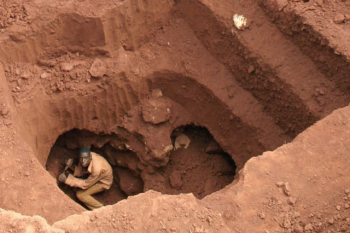
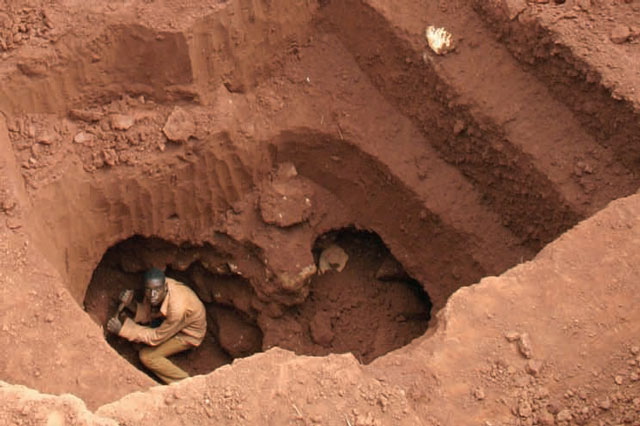
Artisanal miner, DRC
OECD Minerals Policy
The OECD has developed a model supply chain policy for a responsible global supply chain of minerals from conflict-affected and high-risk areas.