Background
Over recent decades, a growing number of companies have become involved in understanding and addressing the human rights issues linked to their operations. The UNGPs recognise that companies of all sizes and in all industry sectors can adversely impact their employees and the workers in their supply chains as well as the communities around the operations. (See UNGPs section for definitions of human rights and more on the UNGPs.)
Determining the human rights impacts associated with the commodity trading sector is challenging given, for example, the diversity of the sector, the complex and varied supply chains associated with specific commodities and the numerous business relationships involved.
The box below provides a brief illustrative overview of potential adverse human rights impacts associated with different activities involving commodities (see also the Mapping Study p15):
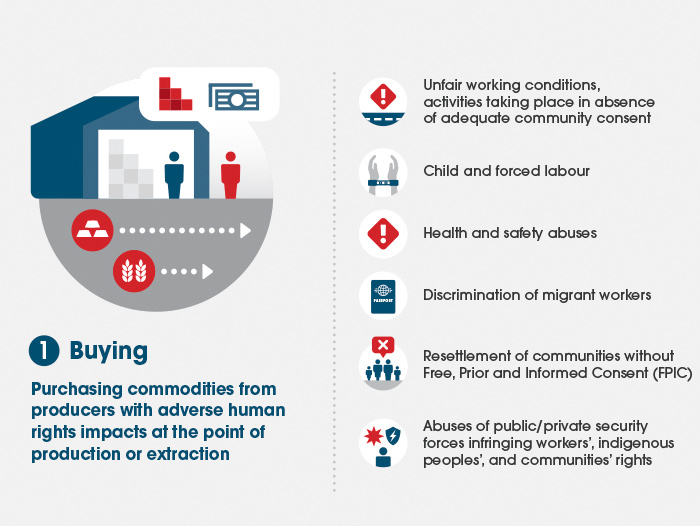
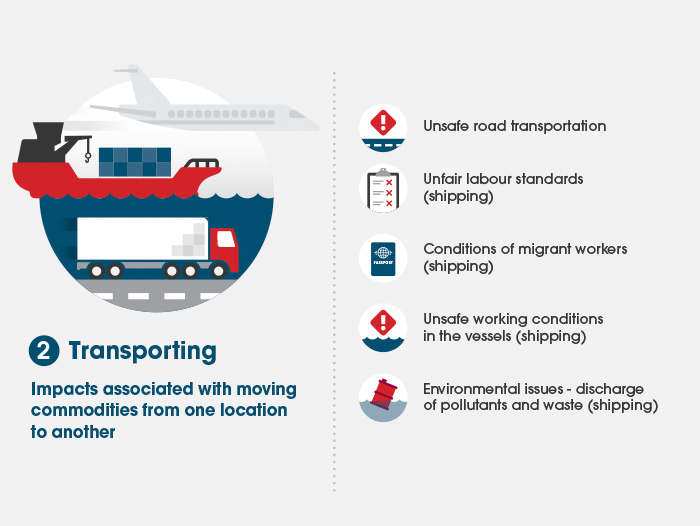
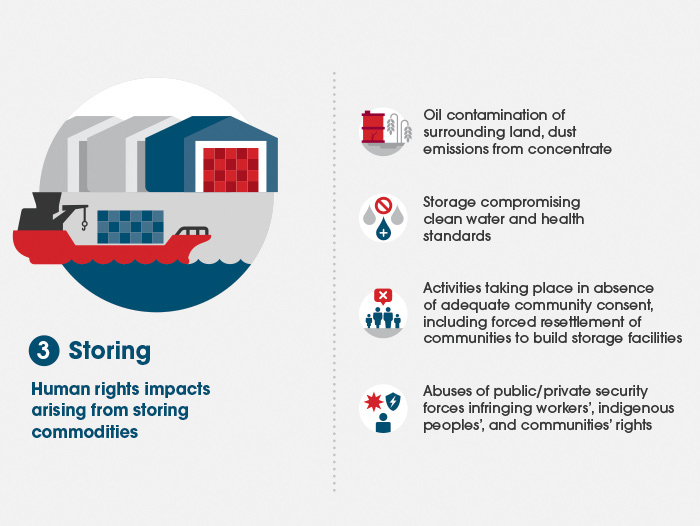
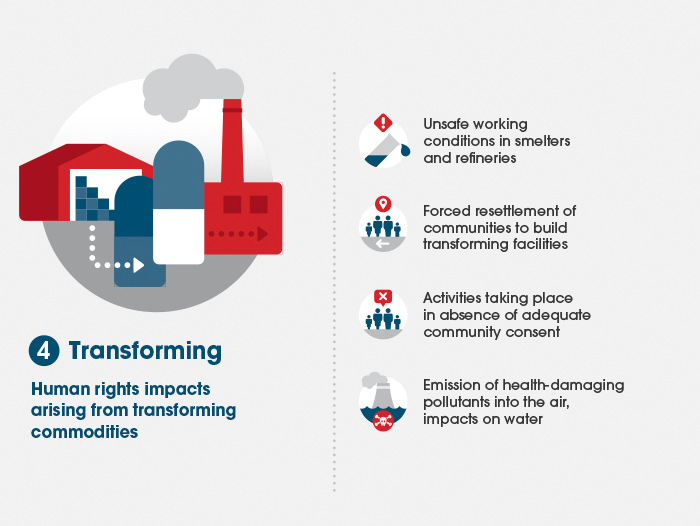
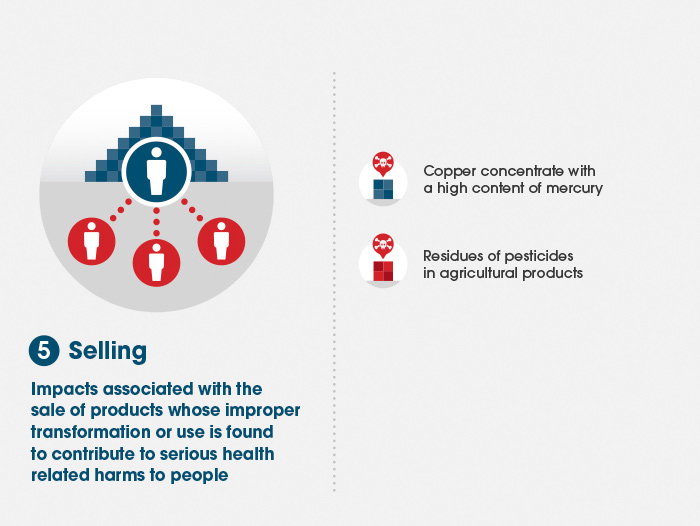
Illustrative Examples of Potential Adverse Human Rights Impacts Associated with Commodity Trading
Adverse human rights impacts can be found all along the value chain of commodity trading, as in any other economic sector. For example, purchases of a commodity may be associated with producers implicated in labour standards abuses such as child and forced labour. Commodities may also be linked to negative effects on community health and safety, and to adverse impacts associated with community resettlement.
The movement of commodities is another area where trading activities may be associated with human rights abuses. For example, impacts on rights of workers who may be involved in moving commodities from one location to another, such as those working in shipping or warehousing, are relevant in this context. Storage infrastructure for commodities, such as tank terminals, may also be associated with adverse impacts, such as fuel leaking from storage tanks adversely impacting public health.
Challenging Governance
Human rights impacts are closely related to operating contexts and the practices of business partners. As the UNGPs make clear, these factors will shape the policies, processes and practices needed in order to prevent and address adverse human rights impacts. In States where governance is weak, in situations where administrative and corporate practices lack transparency and in cases where States fail to meet their duty to protect human rights for any reason, the responsibility of companies to respect human rights does not change. However, it is likely to be more challenging for companies to exercise that responsibility.
Some industry sectors have developed joint initiatives to address the challenging governance, transparency and human rights related issues they may face. In most cases, these initiatives involve the participation of civil society and governments. In the extractives sector, the Voluntary Principles on Security and Human Rights guide companies in maintaining the safety and security of their operations within an operating framework that encourages respect for human rights. Commodity specific initiatives, although not focusing primarily on the UNGPs, are also relevant in this context (such as the International Cocoa Initiative and the iTSCi Programme).
Definition Internationally recognised human rights
The UN Guiding Principles on Business and Humam Rights define these – at the minimum – as the rights in the International Bill of Human Rights (meaning the Universal Declaration on Human Rights, the International Covenant on Civil and Political Rights and the International Covenant on Economic, Social and Cultural Rights) and the principles concerning fundamental rights set out in the International Labour Organization’s Declaration on Fundamental Principles and Rights at Work.
Definition Negative human rights impact
A negative human rights impact occurs when an action removes or reduces the ability of an individual to enjoy his or her human rights.
Definition Potential human rights impact
A potential human rights impact is a negative impact that may occur but has not yet done so.