





Key Actions
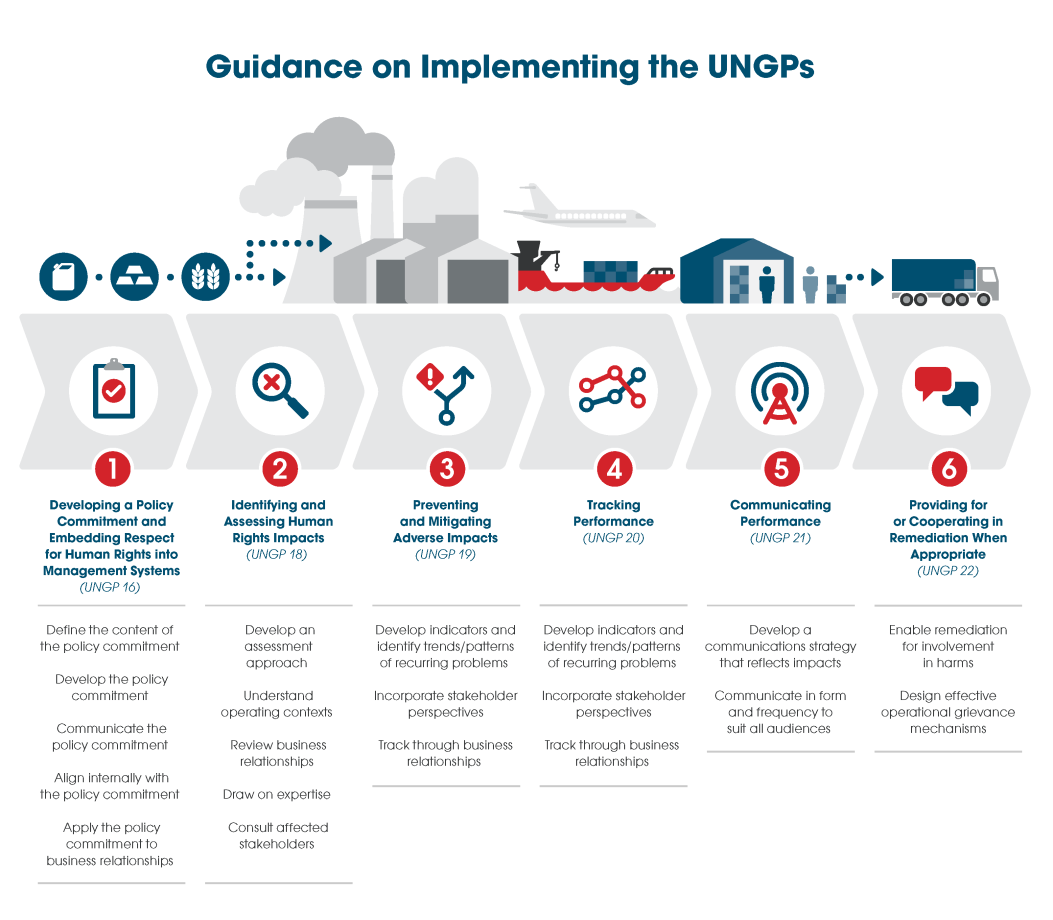
v. Apply the policy commitment to business relationships
The principles set out in the human rights policy statement should form an integral part of a company’s way of doing business with all partners. This means that managers should take every opportunity to discuss the company’s human rights policy with counterparts and set out expectations regarding human rights in collaborative initiatives as well as in the formal agreements or documentation with business relationships (e.g. collaborations around supplier codes of conduct, joint venture contracts, side letters to investee entities etc.). In this way, respect for human rights can be better leveraged and made a clear priority in all company activities (see Stage 3, iii. Use leverage with business partners).
The boxes below show specific examples in the context of commodity trading business relationships:
Example Commodity Trading Company Supplier Contract Anti-Slavery Clause
In relation to anti-slavery and human trafficking laws, a trading company added the clause below to a contract with a supplier:
“In performing its obligations under this contract, the Supplier shall: (a) comply with all applicable anti-slavery and human trafficking laws, statutes, regulations in force; and (b) comply with the Company Supplier Code of Conduct (incorporated by reference and found on the company website). The Supplier warrants that neither the Supplier nor any of its officers, employees or other persons associated with it: (a) has been convicted of any offence involving slavery and human trafficking; and (b) having made reasonable enquiries, so far as it is aware has been or is the subject of any investigation, inquiry or enforcement proceedings by any governmental, administrative or regulatory body regarding any offence or alleged offence of or in connection with slavery and human trafficking. The Company may terminate this contract with immediate effect by giving written notice to the Supplier if the Supplier acts in breach of the Company Supplier Code of Conduct.”
Example General Compliance Clause
When engaging with counterparties, a large trading company includes the following general compliance clause:
“Each Party warrants, represents and undertakes to the other that it will comply with all applicable laws, rules and regulations including without limitation sanctions, anti-corruption, anti-money laundering and tax laws and that it will take all appropriate steps to respect human rights, consistent with the United Nations Universal Declaration of Human Rights and the United Nations Guiding Principles on Business and Human Rights in performing this contract.
Each Party has policies and procedures in place that seek to ensure compliance with applicable laws and regulations relating to the prevention of fraud, corruption, money laundering, sanctions and human rights violations.”
Example Supplier Code of Conduct
One trading company active in the agricultural sector (the “Company”) expects its suppliers to act in accordance with a supplier code of conduct. The code covers the following topics:
Legal and Ethical Compliance
Expectation from suppliers to have in place policies and procedures to conduct their business in compliance with all applicable laws, rules and regulations including antitrust laws, applicable sanction regimes in bribery, corruption, money laundering or other fraudulent practices.
Human Rights and Labour
Expectation that suppliers ensure that slavery and human trafficking are not taking place anywhere in their supply chains or in any part of their business and comply with international human rights and labour standards. Zero tolerance for violence, harassment or abuse in the suppliers’ operations and for discriminatory policies.
Supply Chain Responsibility
Expectation from suppliers to have in place enhanced levels of control and transparency to assist the Company in the commitment to provide traceability throughout the supply chain. The Company expects suppliers to engage in and be supportive of sustainability commitments to improving the quality of farmers’ yields, quality of product and, in turn, their income.
Environment
The company expects its suppliers to comply at a bare minimium with environmental laws, to hold required permits and commit to improve environmental practices and minimise the environmental impact of their operations through, amongst others: (i) efficient use of natural resources; (ii) the responsible use of water and energy resources and maintenance of air quality; (iii) proper recycling or disposal of waste; (iv) practices to avoid adverse impacts in relation to pesticides and deforestation.
Health and Safety
Suppliers should adhere to local health and safety laws and work towards safeguarding the health and safety of their employees. The Company may assess compliance with the code at any time it has a business relationship with the supplier, and any violations of this code may lead to termination of the business relationship. The code is being reviewed on a regular basis. Suppliers are notified of any important change and the latest version is available on the Company’s website.
Example Applying Human Rights Commitments to Commodity Purchase Agreements
When engaging with a supplier producing commodities, a trading company included in the contractual agreements expectations with regards to human rights.
The company included the terms of the Code of Conduct that reflects human rights standards in contracts (e.g. zero tolerance for suppliers’ human rights abuses, in relation to both their people and the communities in which they work). By incorporating the Code of Conduct into the agreement, the trading company thus made compliance with the Code a contractual obligation.
Terms also included the right to terminate business in the event of serious, repeated or unaddressed breaches, and a requirement for effective grievance mechanisms for workers to be in place.
To ensure the effectiveness of these provisions, the parties also agreed monitoring of these provisions through:
- internal monitoring systems of the supplier,
- on-the-ground assessments/audits by the trading company, or
- third party on-the-ground audits by specialised auditing firms.
Example Applying the Commitment to Agreements with Shipping Companies
When engaging with ship owners, or charterers, or their appointed representatives (e.g. vessel management companies), a commodity trading company should adapt its agreements to ensure that the rights and freedoms of those working on-board are duly respected. For example, the contract could explicitly include the following requirements for ship owners:
- Compliance with the requirements of the applicable ILO labor convention (2006 ILO Maritime Labour Convention).
- In support of the above-mentioned convention, develop / deploy as follows:
- decent on-board working and living conditions agreements, to be signed by both the seafarer and the ship-owner, or a representative of the ship-owner;
- monthly pay, in full and in accordance with the employment agreement and any applicable collective agreement;
- 14-hour work limit in any 24-hour period, 72 hours in any seven-day period;
- payment of repatriation costs in case of illness, injury, shipwreck, insolvency, sale of ship etc.;
- specific requirements for living accommodation and recreational facilities – including minimum room sizes, and satisfactory heating, ventilation, sanitary facilities, lighting etc.
- Access to prompt medical care for seafarers when on board and in port.
-
Look to adopt or encourage the adoption of the Delivering on seafarers’ rights Code of Conduct, a tool for charterers and cargo owners to ensure seafarers' rights and welfare are respected.
-
Cargo is travelling through conflict-prone or dangerous waters, or when engaging armed guards on vessels, employ private security companies who adhere to the International Code of Conduct (ICoCA), or encourage suppliers to do so.
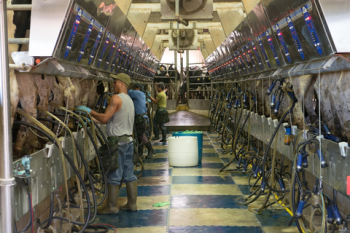
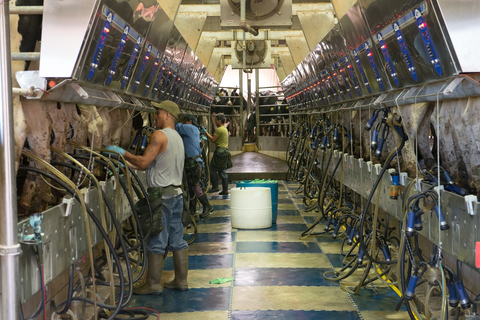
Milking parlour, US
Definition Business relationships
Business relationships refer to those relationships a company has with business partners, entities in its value chain and any other non-State or State entity directly linked to its business operations, products or services. They include indirect business relationships in its value chain beyond the first tier, and minority as well as majority shareholding positions in joint ventures.

Corn farm, US

Definition Leverage
Leverage is an advantage that gives power to influence. In the context of the UN Guiding Principles on Business and Humam Rights, it refers to the ability of a company to effect change in the wrongful practices of another party that is causing or contributing to a negative human rights impact.