


Key Actions
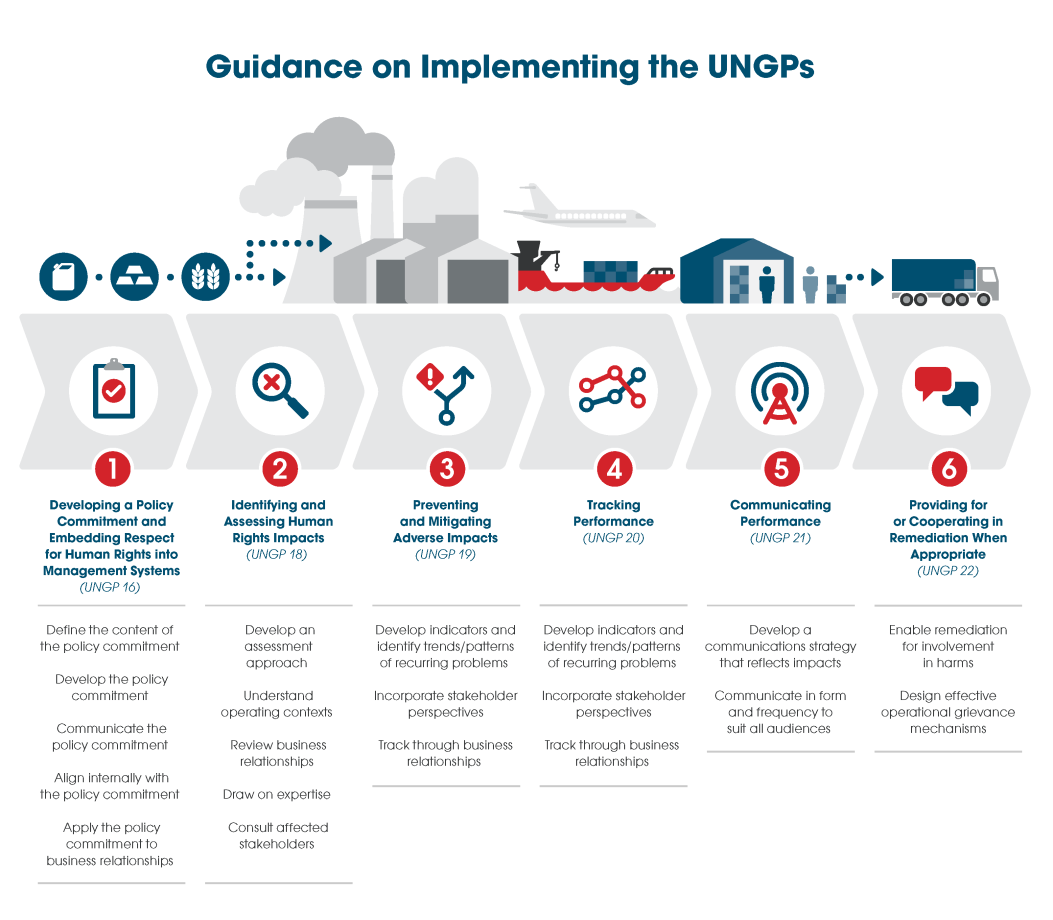
ii. Design effective operational grievance mechanisms
A company grievance mechanism at the operational level (e.g. at headquarters, storage facilities, refineries) facilitates the identification of grievances and allows them to be addressed as early as possible. Operational level grievance mechanisms contribute also to the management of emerging global legal risks.
Such operational-level grievance mechanisms can be a tool that individuals such as workers or external groups may use to raise concerns about adverse impacts and to seek remedy. These mechanisms can provide opportunities for affected people to receive remedy sooner and to address their concerns before they escalate or lead to otherwise preventable harm. Operational-level grievance mechanisms should not preclude access to judicial or other state-based processes, or undermine the role of legitimate trade unions. Specific “effectiveness criteria” set out in the UNGPs should guide the design and operation of these mechanisms:
UNGPs Effectiveness Criteria for Non-Judicial Grievance Mechanisms
Any mechanism addressing human rights grievances should be:
- legitimate – for example trusted by stakeholder groups;
- accessible – known and accessible in particular to those facing barriers to access;
- predictable – clear timeframes and clarity on processes and outcomes;
- equitable – fair and reasonable access to information, advice, expertise;
- transparent – regular and sufficient information on the mechanism’s performance;
- rights-compatible – consistent with internationally recognized human rights standards;
- based on dialogue and engagement – consultation in addressing and resolving grievances;
- a source of continuous learning – identifying lessons and preventing future grievances.
Involving external stakeholders in the design of the mechanism builds trust in the mechanism and may prompt its use as a channel to raise grievances early:
Benefits of Operational-level Grievance Mechanisms
The Commentary to UNGP 29 makes clear that operational-level grievance mechanisms should be accessible directly to individuals and communities who may be adversely impacted by a business enterprise.
Putting such a mechanism in place can help a company to:
- build and maintain a social licence in areas where it operates;
- identify, manage and monitor potential adverse impacts and risks in a timely manner, as well as positively address community concerns;
- avoid the potential for issues to escalate, be repeated or result in conflict or legal disputes;
- provide a platform for affected communities to raise concerns and communicate through an established and formal process and receive a formal company response;
- clarify organisational arrangements to record, review, escalate and resolve complaints and grievances through a systematic and transparent process;
- strengthen performance and ensure compliance with corporate codes, policies and principles as applicable to employees and contractors;
- ensure alignment with international principles and standards;
- refine and strengthen existing processes and agreements, for example, with joint venture partners and business relationships, to ensure they are in line with corporate expectations;
- integrate grievance management reporting systems with other corporate reporting systems.
For small and medium-sized companies, where resource constraints make it difficult to run a self-standing grievance mechanism, participation in an effective external mechanism led for example by an industry association or a multi-stakeholder group, such as a commodity roundtable which has developed its own grievance mechanism, is a potentially useful step:
Remediation and Small and Medium-sized Enterprises
The European Commission guide (p10) to human rights for small and medium-sized enterprises includes the following recommendation to enable remedy for those affected, in cases where an SME is directly involved in a negative impact:
“(...) you need to make an effort to stop such impacts and, if your company caused or contributed to it, find ways to correct the situation for the victim(s). Making right what went wrong could involve apologizing, financial or non-financial compensation or any other remedy that the victim and your business agree on as an appropriate response. It must also involve measures to ensure that the negative impact does not occur again. It is important to understand what those affected would view as effective remedy, in addition to your enterprise’s own view.”
How can small and medium-sized enterprises do this in practice?
- Be open: talk to individuals that feel affected by your business. This might help resolve complaints early and directly, limiting the problem both for your business and for the affected persons.
- Put in place a complaints system, where people who feel that they, or others, have been or will be negatively affected by your business may safely raise concerns. Alternatively, enable access to such a system administered by an outside organisation (for example, by an industry association or a multi-stakeholder group).
- Engage in collective bargaining and constructive relations with duly elected employee representatives.
- For individuals from outside the company, you could consider establishing a public email address or a phone line to handle complaints or feedback.
UNGP 29 PRINCIPLE
To make it possible for grievances to be addressed early and remediated directly, business enterprises should establish or participate in effective operational-level grievance mechanisms for individuals and communities who may be adversely impacted.
Coal drag