

Purpose
Tracking the effectiveness of responses to adverse human rights impacts is a key step which companies should take to verify whether human rights risks identified are being addressed in operations and business relationships.
A well-functioning tracking system enables a company to analyse its response and to understand human rights trends and patterns, which can highlight recurrent problems across the company requiring further attention. It also helps disseminate the right information and good practices to anticipate and improve the management of actual and potential risks across the company’s operations as well as establishing internal accountability and driving improvement. Furthermore, a tracking system serves as the basis to properly disclose and communicate what the company is doing to meet the responsibility to respect human rights.
It should be noted that processes or systems may already be in place within a company to track certain human rights risks given the evolving requirements of some stock exchanges, banks and governments on issues such as health and safety standards or ethical and compliance requirements. Such systems provide a potentially useful framework through which a company’s leading human rights risks can be mapped and gaps in tracking can be identified.
Key Actions
The Commentary to UNGP 20 notes that “individuals from groups or populations that may be at heightened risk of vulnerability or marginalization” require special consideration as part of a company’s tracking efforts. The Commentary also emphasises that “tracking should be integrated into relevant internal reporting processes” and existing tools including “performance contracts and reviews as well as surveys and audits, using gender-disaggregated data where relevant” should be utilised. Finally, the Commentary suggests that “operational-level grievance mechanisms can also provide important feedback on the effectiveness of the business enterprise’s human rights due diligence from those directly affected.” Consulting and engaging with staff members also helps improve and develop efficient tracking tools:
Incorporating Staff Perspectives and Tracking Performance
In order to build support for its corporate responsibility agenda and to validate its understanding of the human rights at risk through the company’s activities and business relationships, an international commodity trading company engaged its traders and operators in a series of ‘deep-dive’ workshops.
Employees exchanged experiences and compared perspectives on risk and responsibility.
The workshops identified, among others:
- opportunities for training improvements, such as informing new staff as to corporate responsibility expectations and accountabilities;
- a divergence in views and understanding on specific physical/operational risks across the supply chain and how such risks could be mitigated either directly, or through business relationships e.g. exploring/exerting leverage;
- varied awareness and/or an appreciation of actual incidents, what could be learned from them and how systems and procedures could be adapted to reduce the likelihood of reoccurrence.
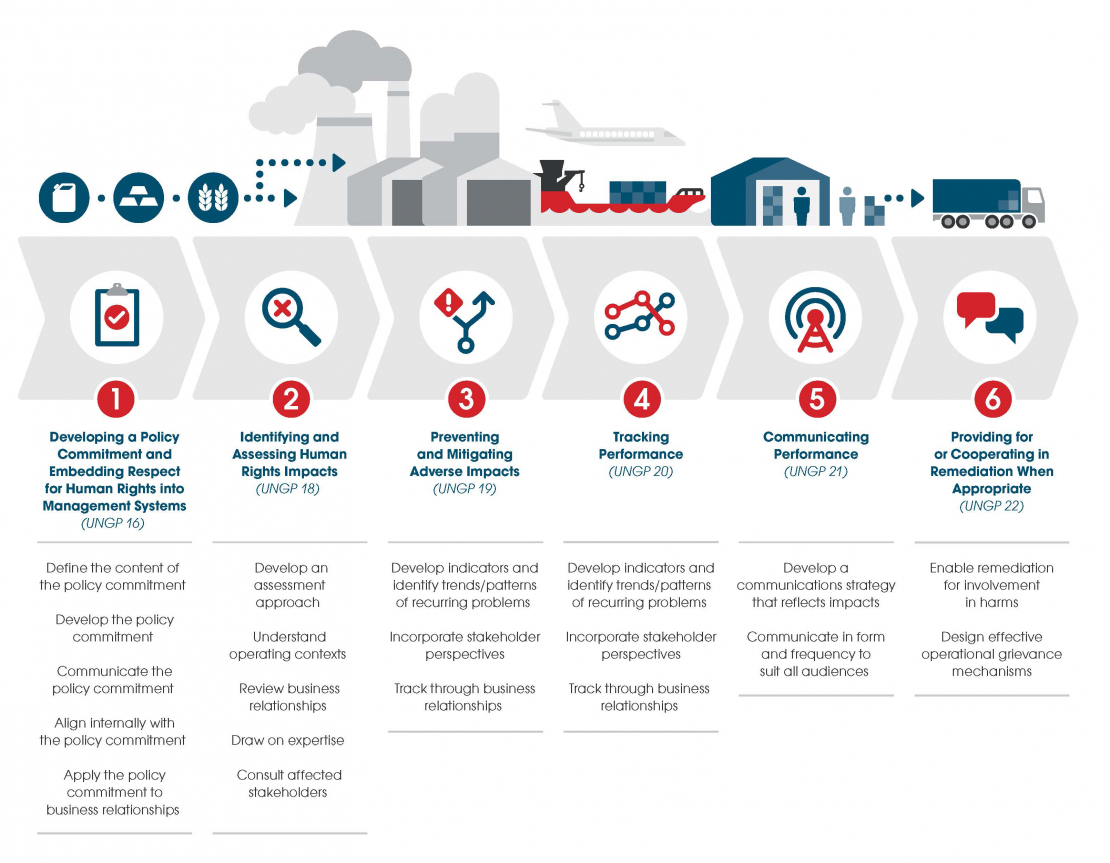
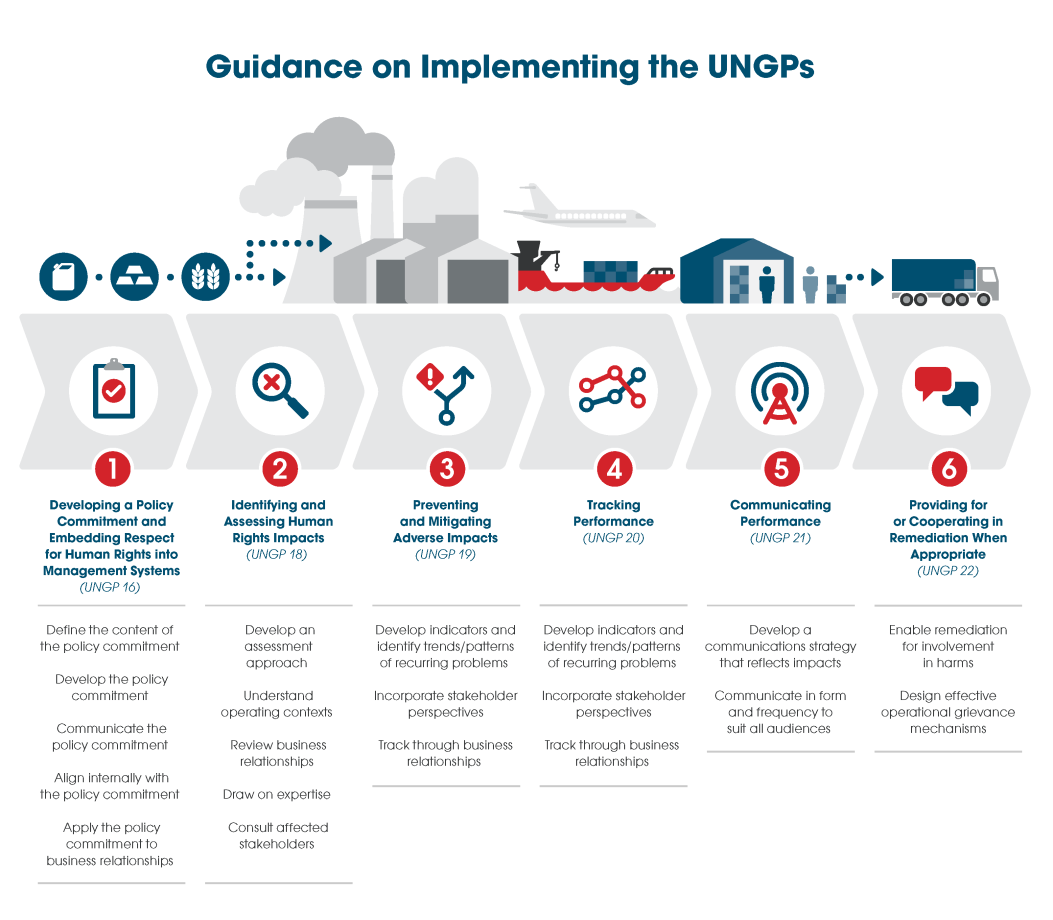
The following general steps can help companies in tracking their human rights performance:
Definition Tracking performance
The process by which a company monitors and evaluates whether it has responded effectively to human rights risks and impacts.
UNGP 20 Principle
In order to verify whether adverse human rights impacts are being addressed, business enterprises should track the effectiveness of their response.
Tracking should:
(a) Be based on appropriate qualitative and quantitative indicators;
(b) Draw on feedback from both internal and external sources, including affected stakeholders.