



Purpose
All companies are expected to take practical steps to address potential human rights risks and adverse impacts they identify during assessment processes. Having effective systems in place to respond to human right risks and impacts through its activities means a company will be more likely to manage such situations and reduce actual adverse impacts on people (UNGP 13 - see box).
Potential impacts should be addressed through prevention or mitigation. To identify the best ways to address potential impacts, a company first needs to understand the nature of its involvement:
- Where the company is at risk of causing an impact, it should take the necessary steps to prevent the impact from occurring.
- Where the company is at risk of contributing to an impact, it should first take steps to avoid this contribution. Where it does not control those who may contribute to the impact, it should use its leverage with them to mitigate the remaining risk.
- Where a negative impact may be directly linked to the company’s operations, products or services through a business relationship, even without a contribution by the company itself, it should use whatever leverage it has to mitigate the risk that the impact occurs (UNGP 19 - see box. See also section on Commodity Trading and Human Rights Responsibilities (cause, contribute, link) and actions to prevent and mitigate adverse impacts.)
Actual impacts – those that have already occurred – should be a subject for remediation (UNGP 22 - see box, and see Stage 6 (commentary to UNGP 17).
Findings from impact assessments should be communicated across all relevant internal company functions and processes and should lead to appropriate integration and follow up actions.
UNGP 19
In order to prevent and mitigate adverse human rights impacts, business enterprises should integrate the findings from their impact assessments across relevant internal functions and processes, and take appropriate action.
- Effective integration requires that:
- responsibility for addressing potential human rights risks relating to business activities is assigned to the appropriate level and function within the company;
- internal decision-making, budget allocations and oversight processes enable effective responses to potential impacts.
- Appropriate action will vary according to:
- whether the company causes or contributes to an adverse impact, or whether it is involved solely because the impact is directly linked to its operations, products or services by a business relationship;
- the extent of its leverage in addressing the adverse impact.
Key Actions
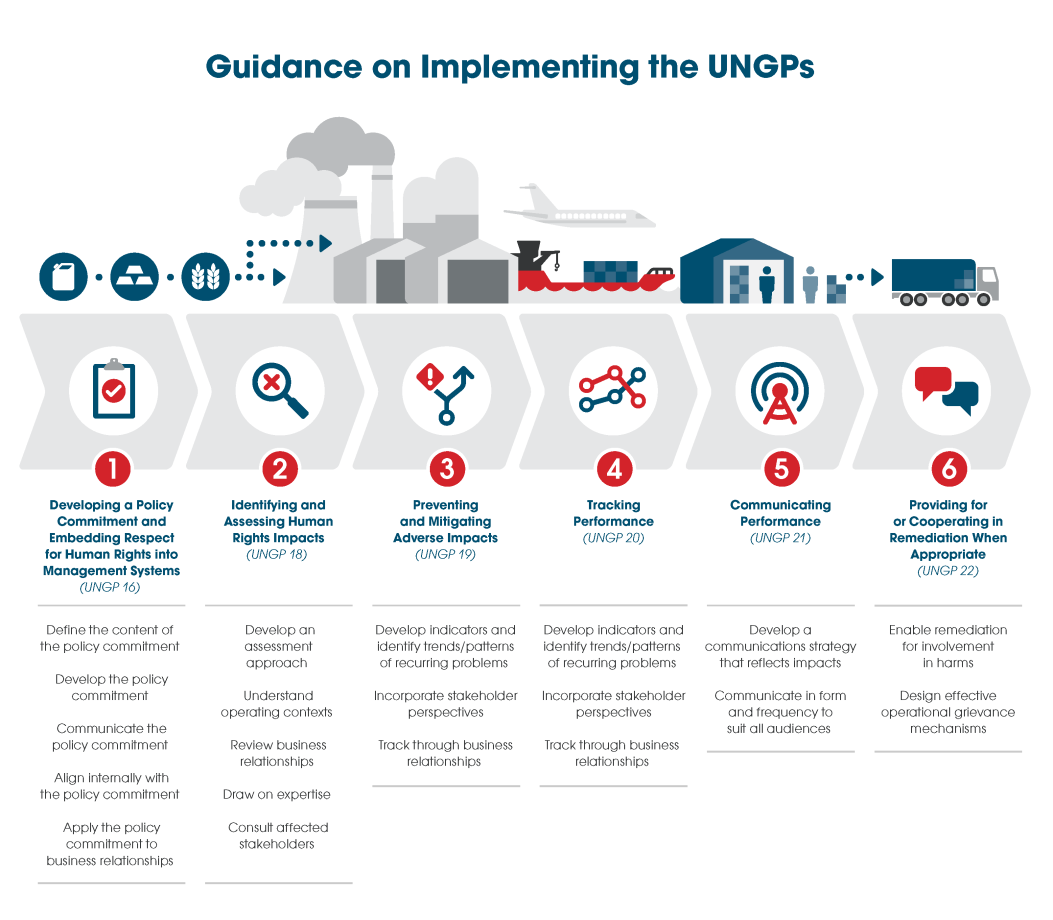
The following general steps can help companies in preventing or mitigating adverse human rights impacts:
UNGP 13 Commentary
...a business enterprise’s “activities” are understood to include both actions and omissions...
Definition Negative human rights impact
A negative human rights impact occurs when an action removes or reduces the ability of an individual to enjoy his or her human rights.
UNGP 19 Commentary
...If the business enterprise has leverage to prevent or mitigate the adverse impact, it should exercise it. And if it lacks leverage there may be ways for the enterprise to increase it...
UNGP 22 Principle
Where business enterprises identify that they have caused or contributed to adverse impacts, they should provide for or cooperate in their remediation through legitimate processes.
Definition Potential human rights impact
A potential human rights impact is a negative impact that may occur but has not yet done so.